
Timber Fencing And Paling Fences Across South East Queensland
Paling, lapped-and-capped and good-neighbour styles for privacy and boundary lines. The style you choose changes the price and the look more than the timber does.
What timber fencing Brisbane homeowners are actually choosing between
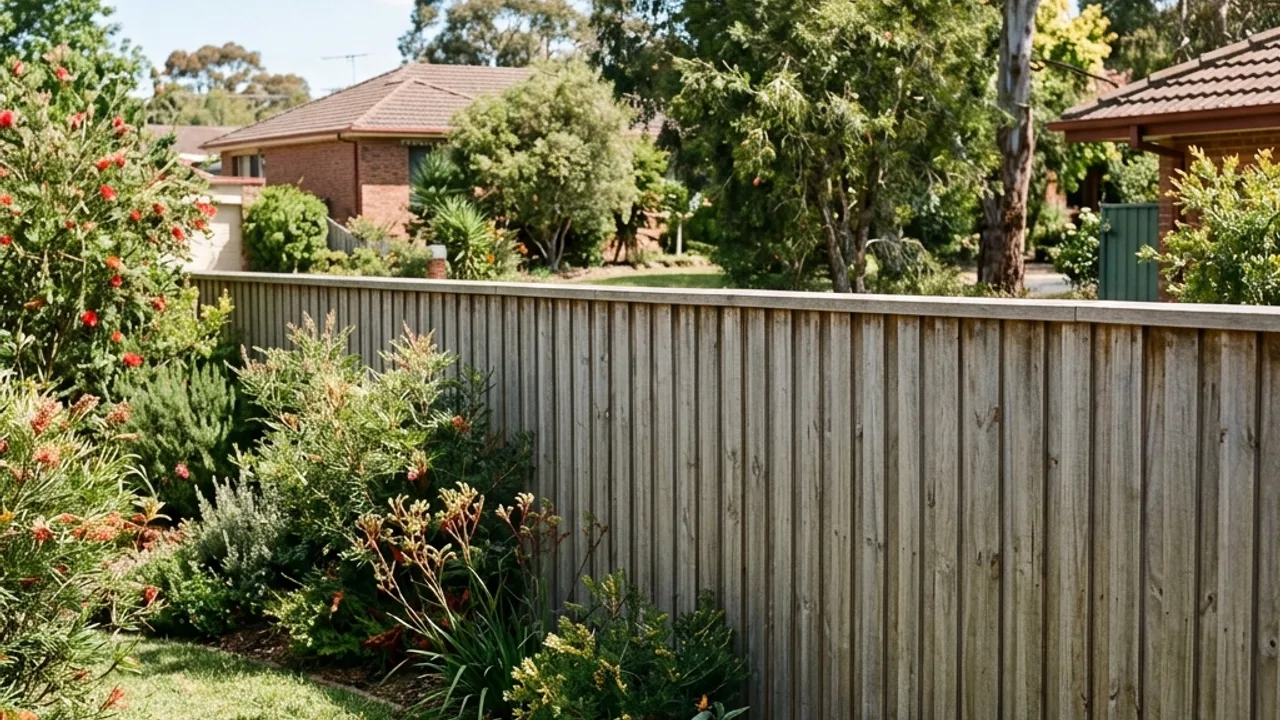
Timber is still the default privacy fence on established South East Queensland streets, and the real decision is not timber versus something else. It is which timber style. A butted paling fence has boards fixed edge to edge, which is the budget build and the one where gaps open up as the timber dries and shrinks. Lapped and capped overlaps the palings so there are no gaps at all and finishes with a capping board along the top, which is the premium privacy build.
There is a third consideration people often miss until the fence is up. A standard paling fence has a good side and a frame side, and the rails face one property. A good-neighbour build presents the same face both ways, which is worth raising before the job starts rather than after your neighbour notices. On a shared boundary that conversation is easier to have early, particularly if costs are being split.
What goes into a timber fence
Posts in bored footings
The posts carry everything. Depth and concrete are set by fence height and ground conditions, and gate posts get more than the line posts do.
Rails spanning between posts
The horizontal timbers the palings fix to, usually two or three depending on the fence height. Rail count is a structural decision, not a finish one.
Paling style and spacing
Butted, lapped or lapped-and-capped. The choice sets both the paling count and whether the fence stays gap-free as the timber moves.
Plinth board along the ground
The horizontal board sitting on the ground under the palings, closing the gap where the ground falls away and keeping the paling ends out of the dirt.
Capping and finishing
A capping rail along the top squares the fence off, protects the paling end grain and is a large part of why a capped fence reads as finished.
Removal of the existing fence
Old palings, rails, posts and footings out and disposed of. On a fence that has been there thirty years the old posts are rarely cooperative.
Which style suits which boundary
Match the build to how visible the fence is. A rear boundary against a reserve or a laneway does not need capping, and a butted paling fence there is a sensible use of a budget. A side fence you look at from a deck, or a return that runs down the side of a front yard, is a different case. That is where the gaps opening up over the first two summers become the thing you notice every day, and where lapped and capped earns the extra.
The other input is what the fence is for. Screening a pool pump or a bin store just needs a solid face. Genuine privacy between two houses sitting close together needs the lapping, because a butted fence with a five millimetre gap between every paling is not private once the timber has dried out. Decide that before the quote, since the style changes the paling count and the price rather than being a finish applied at the end.
Sharing the cost of a dividing fence
Where a fence sits on the boundary between two residential properties, the Neighbourhood Disputes (Dividing Fences and Trees) Act 2011 is the framework. Adjoining owners generally contribute equally to a sufficient dividing fence, and for residential land a sufficient fence is between 0.5 metres and 1.8 metres high and substantially made of the prescribed fencing materials, which include timber palings. If you want something better than sufficient, taller, fancier or in a premium style, you cover the difference yourself.
The process has a shape. A notice to contribute is the formal notice one owner gives the other, stating the land, the fence line, the type of work and the estimated cost, with at least one written quotation attached. If the owners have not agreed within one month, either can apply to QCAT within two months of the notice. What nobody can tell you in advance is what your neighbour will agree to, so treat this as a process to follow rather than an outcome to count on, and get the material and standard agreed in writing before ordering anything.
Upkeep, service life and the honest comparison
Timber asks for more than steel does. Palings weather, the sun-facing side goes grey first, and a coating extends the life of the timber if you are prepared to maintain it. Ground contact is where the trouble starts, which is exactly what the plinth board is there to prevent. A well-built timber fence with a plinth, decent footings and airflow behind it will run a long time. One with palings sitting in wet soil will not.
Against Colorbond the trade is straightforward. Steel wants no maintenance and holds a line, timber gives you a look that suits a Queenslander or a character street in a way steel does not, and it can be repaired board by board rather than panel by panel. Near the coast the calculation shifts again, since salt air is harder on fixings and hardware than on the timber itself. Neither is the right answer everywhere, and anyone telling you otherwise is selling one of them.
How a timber fence job runs
- 1
Tell us the boundary
Length, height, whether it is shared, and whether you have a style in mind or want the options talked through.
- 2
Site look and neighbour question
Ground, access and the existing fence, plus a plain conversation about who the fence is shared with and what that means.
- 3
Written quote by style
Priced so you can see what capping and lapping actually cost against a plain paling build, with removal shown separately.
- 4
Build
Old fence out, posts bored and set, rails fixed, palings and plinth on, capping last. Gates hung and adjusted at the end.
How we handle timber fence jobs
Style priced as a choice, not a default
You should see what lapped and capped costs against a plain paling run on your own boundary. Quoting one style and calling it the price is how people end up with gaps they did not expect.
The neighbour process explained, not promised
There is a real notice and contribution process under the Act, with real timeframes. We will walk you through how it works. Nobody can promise you what the neighbour agrees to.
Plinth and ground clearance built in
Palings in contact with wet soil are the reason timber fences fail early. A plinth board and proper ground clearance are cheap at build time and impossible to add later.
Still weighing the options? The pool fencing and colorbond fencing pages cover the nearest alternatives, the cost calculator puts an indicative band against each, and the full service list shows where this one sits.
Timber fences on established streets
Timber holds its place in the older parts of the region for a reason that is partly practical and partly visual. Character streets through the inner west and the south-east are lined with houses where a steel panel fence would look wrong at the front, and where the existing fence being replaced was timber to begin with. Replacement is the dominant job here rather than first installation, which means old posts, old footings and a boundary line that may have drifted since it was originally set out.
In the Ipswich area the pattern is different again. Established project-home streets around Bellbird Park and Redbank Plains went up with timber palings that are now reaching the age where a whole run goes at once rather than a panel at a time. Out on the Karalee side, riverside acreage blocks often want a conventional timber fence around the house yard while running rural-style wire elsewhere on the property, which is two different builds on one address.
Timber Fencing across Brisbane
Housing stock and boundary conditions change what a timber fence job looks like. Pick your suburb for the local notes.
Timber fencing questions
What is the difference between Colorbond and timber boundary fencing?
Who pays for a dividing fence between neighbouring properties?
What is a notice to contribute for a dividing fence?
How tall can my fence be without council approval in Queensland?
Can a damaged fence panel be repaired instead of replacing the whole fence?
Price a timber fence in the style you want
Send the length, the height and whether the boundary is shared. You will get a written response covering the style options and what each one costs.
Talk to a specialist
Ready to start your Brisbane retaining walls and fencing?
Share the details and we will help you take the next step with confidence.