
Retaining Walls and Fencing in Chapel Hill
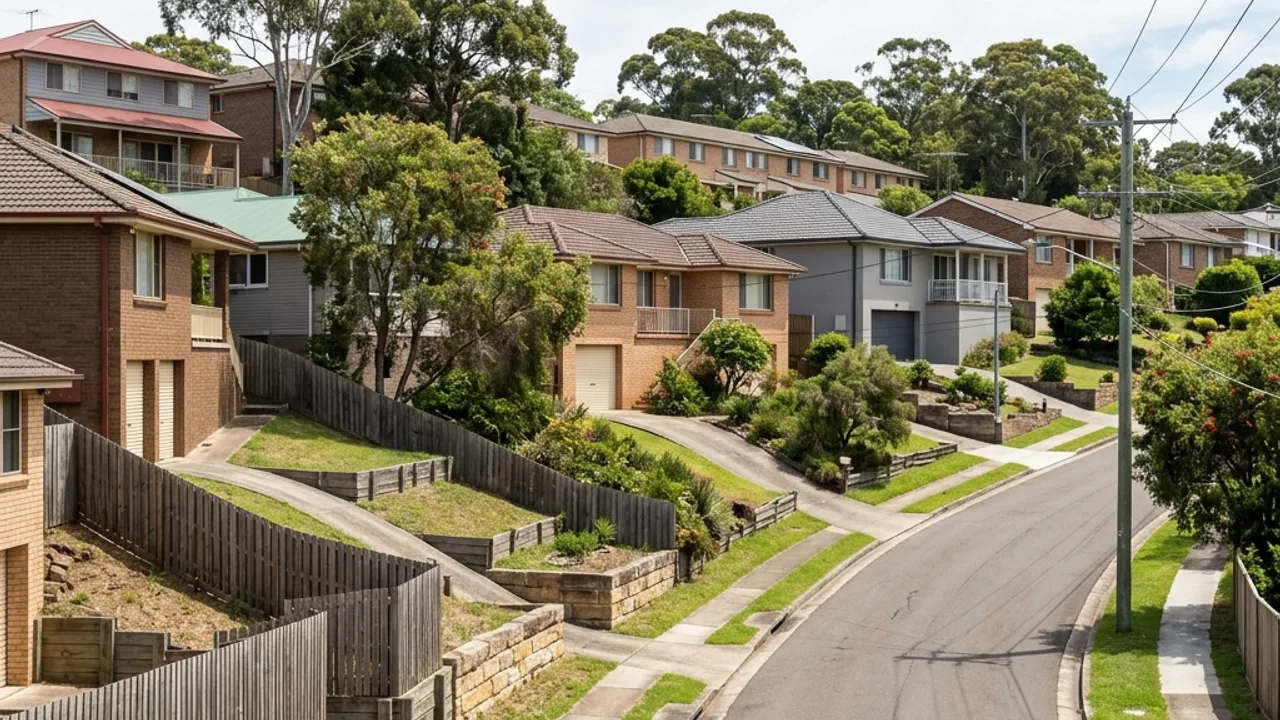
Acreage-edge blocks on Gap Creek Road grade sharply toward Brookfield, so terraced walls carry real fill loads.
Chapel Hill sits on the transition between standard suburban blocks and the acreage country behind it, and the retaining questions change as you move west across the suburb. Bigger blocks mean bigger cuts, longer boundaries and terraces that are genuinely holding fill rather than tidying a garden edge.
Retaining wall installation for Chapel Hill acreage-edge blocks in Brisbane
Where a block was benched to create a level house pad, the fill placed behind the wall is part of the retained height, not something separate from it. That catches people out. A wall face measuring 900 millimetres with another 300 millimetres of fill behind it is over the 1.0 metre threshold and needs building approval, and the same wall will also need RPEQ design certified on a Form 15 if it is holding a real load. Deeper cuts on the western side of the suburb also mean the wall is often close to the house or to a second wall, which brings the 1.5 metre proximity trigger into play even where the height test alone would not.
Long boundaries change the fencing conversation too. On a larger Chapel Hill property the cost is driven by linear metres and by post spacing on uneven ground, so a site walk before quoting is worth more than a phone estimate. It is also worth knowing that Queensland licensing turns on the value of the work rather than the height of anything: a paid contractor building a fence on residential land worth $3,300 or more needs a QBCC licence, while a rural-style fence of posts and strained wire with no concrete footing is exempt regardless of value. On a block that runs to acreage at the back and suburban at the front, both can apply on the same title.
Why Chapel Hill owners use our help
We measure retained height including the fill
We measure retained height including the fill behind the face, because that is the number the approval test uses and the one most quotes quietly leave out.
We walk long boundaries before pricing them
We walk long boundaries before pricing them, since post spacing on undulating ground is what separates a realistic figure from an optimistic one.
We explain where the licensing threshold sits
We explain where the licensing threshold sits and where the rural wire exemption applies, so an acreage-edge property is not quoted as though every metre were the same job.
About Chapel Hill
Chapel Hill occupies the western end of postcode 4069, where the suburban grid runs out and the land climbs toward the Mount Coot-tha forest on one side and the Brookfield rural edge on the other. The Sugarbag Road bushland marks that boundary along the southern flank of the suburb. Housing is predominantly detached, from 1970s brick-veneer through to substantial later builds on benched pads, with block sizes increasing steadily as you move west. Very few properties here are flat. The typical Chapel Hill site has a level house platform cut into falling ground with terraced garden below it, which is exactly the arrangement that produces a set of retaining walls of different ages, all doing structural work.
What makes a Chapel Hill site different
Gap Creek Road and Boscombe Road climb noticeably, and the blocks off them are frequently long, narrow and stepped, with a lower yard that can only be reached down one side of the house. Where a property backs onto the rural edge, the boundary may be an old wire line rather than a built fence, and replacing it raises different questions from replacing a suburban paling run. The other recurring pattern here is age spread: an original 1970s builder's wall, a second wall added when a pool went in, and a third from a later landscaping job, each built to a different standard. Assessing them as a group rather than pricing the one that looks worst is usually the more useful starting point.
Retaining wall and fencing services available in Chapel Hill
Get help with your Chapel Hill project
Planning a retaining wall or fence in Chapel Hill?
Tell us what is happening in Chapel Hill and we will help you take the next step.
Send us the details
A photo of the boundary or the existing structure speeds things up. Send it with the form below.
Adjacent suburbs we also cover
Chapel Hill sits alongside Kenmore, Brookfield and Fig Tree Pocket, and the same ground and boundary conditions carry straight across those streets.